Educational
Colombian Rhythmic Systems
Discover how Colombia’s rhythms work — and apply their logic, patterns, and feel directly to your own music.
This online workshop is perfect for musicians who want to:
Understand the unique rhythmic logic of Colombian music
Learn how each rhythm works as a system
Apply cumbia, joropo, currulao, and bambuco to their own compositions and performances
Experience hands-on interactive exercises with body percussion, singing rhythms, and their own instrument
Four Interactive Modules – One Rhythm per Week
3. Joropo (Llanos)
Two rhythmic systems
Harmonic cycles and structures
Maraca, cuatro and harp patterns
Interactive rhythm exercises
4. Currulao & Juga (Pacific Region)
Syncopation and percussion ensemble
Sing and play traditional patterns
Displaced duplets and harmonic ambiguity
Translate to modern music
1. Cumbia (Caribbean Region)
Rhythmic logic & accent hierarchy
Traditional drums and active listening
Play rhythms with body percussion & sing patterns
Apply to your music
2. Bambuco (Andean Region)
Harmonic & melodic patterns
Structure, anticipations and suspensions
Compose your own short phrases
Course Details
Format: Live online via Zoom
Dates: Wednesdays at 1:00 PM ET – March 5, 12, 19, 26, 2026
Duration: 90 minutes per session
Price: Pricing
Early Bird: $190 USD
(Available until February 23)Full Price: $240 USD
(From February 24)
✔️ 4 live 90-minute sessions
✔️ Interactive exercises
✔️ Limited group sizeMinimum group size: 6 participants
Is This Course Right For You?
This course is for people who want to:
Improve their rhythmic thinking
Internalize complex groove systems
Translate traditional logic into their own music
Compose, arrange, or perform with deeper rhythmic clarity
Colombia is the source, not the goal.
Testimonials
“The class struck a perfect balance between cultural context and practical music-making. I learned concepts I could apply right away, and it gave me the tools, inspiration, and confidence to create new music without pressure.”
— Karina
“A powerful workshop. I left with a clear compositional framework inspired by Colombian folk traditions, grounded in respect, curiosity, historical context, and research.”
— Leonardo
Ready to Learn Colombian Rhythms?
Seats are limited to ensure an interactive experience — don’t miss out!
*All payments processed securely via Stripe.
You’ll receive a confirmation email with Zoom details after enrollment.
OTHER COURSES
Artist-in-Residence
Rehearsing/performing original music with student big band
Gregorio was recently invited to Dartmouth College as an artist-in-residence where he spent a week rehearsing his big band compositions with the student ensemble and finally performing this repertoire at the College's auditorium in front of 5000 thousand people. Gregorio's music presented new challenges for the students and he saw in these challenges an opportunity to go in depth into concepts of time-feel, rhythmic accuracy, in-context improvisation, style and on-stage performance that resulted in a profound learning experience for each student as a member of a large ensemble. During this week he also presented interactive workshops about Colombian music for various school departments. The following video shows footage of this residency including student testimonials.
Composition/Arranging/Band leading
Adapting jazz big band techniques to new "world music" styles

Photo Credit: David Garten
Although big band music has a tradition of it's own it has been combined with dozens of other musical traditions and hence, renewing itself continuously. The possibilities are endless, but there are various creative ways for finding a personal language and find new, yet organic, ways to combine the rich colors of big band with other traditions of the world. By performing specific examples of original big band compositions, Gregorio goes in depth as to what questions arrangers/composers should ask themselves when attempting these new combinations so as to attain a unified sound, as opposed to a synthetic one. Rhythm, harmony, orchestration and counterpoint all have a role to play in this discussion. Through Gregorio's personal research on Colombian music and active big band writing he will explain how he has managed to create the personal and recognizable sound that has as much big band influence as Colombian elements and which lead Grammy Award winning Arturo O'Farrill and his Afro Latin Jazz Orchestra to commission him to write a piece to be performed at Symphony Space in New York City.
(Big) band leading in the 21st Century

Photo Credit: Esiphoto
All those who love the big band sound and concept find themselves romanticizing about the "good old days" when hundreds of big bands played 7 nights a week to packed clubs and speakeasies. In a time where music can be created by one person and their laptop, the concept of big band can sound almost obsolete. However, big bands are far from extinct (specially in NY) and young big band leaders such as Gregorio are beginning to emerge and to breath new air into this art form. Big band leaders/composers have to be creative not only with their music but in all sorts of non-musical aspects such as promotion, logistics, aesthetic, presentation and even in paying their band members. A big band student may be well trained in voicings, couplings and reharmonization techniques but probably won't know how to start nor maintain an active, energetic big band. Gregorio shares a very personal and contemporary experience on band leading (not just big band) in one of the most competitive cities in the world and will help students with a list of "do's and don’ts" that will help them maintain a solid group of professional musicians together. From social media efforts and crowd-funding to rehearsing and choosing the right musicians this workshops covers every aspect of being a modern bandleader.
Percussion/Cumbia/Colombian music
Cumbia: a rhythm? a style? a genre?
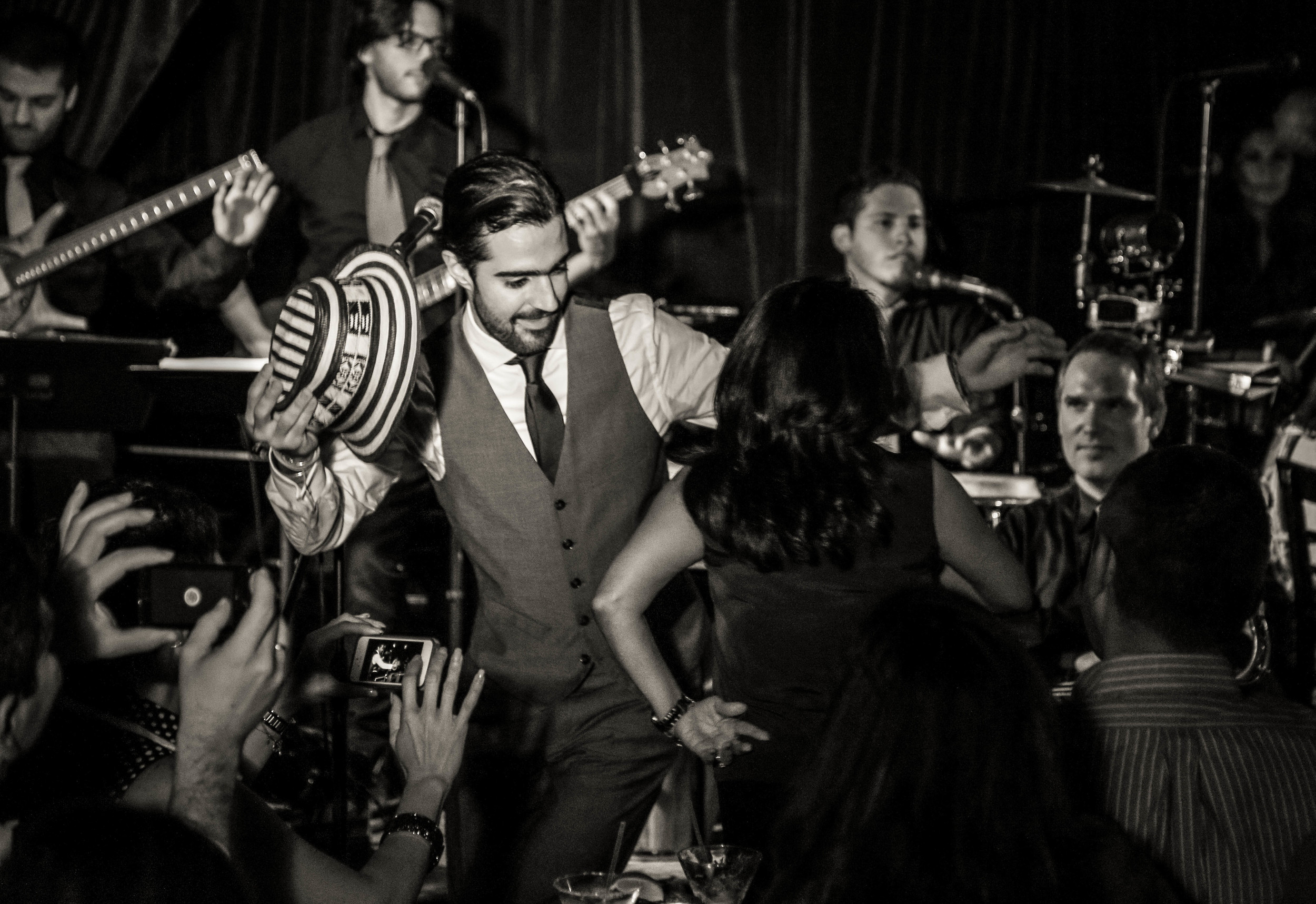
Photo Credit: Fernándo Lodeiro
Cumbia (recently called "The Backbone of Latin American music" on NPR) has been constantly evolving and pushing the limits of what can be considered a music genre, style or rhythm. Originally from the Caribbean coast of Colombia with a unique blend of African, Indigenous and Spanish elements this music has spread through the Americas taking different shapes and forms every where it travels and combining itself with the local sounds, instrumentation and aesthetic and social sensibilities of wherever it travels. Gregorio will present a workshop that combines a historical context of cumbia's evolution while analyzing some of the differences and similarities between some of it's variations from Argentina's cumbia villera to Colombian traditional gaita ensembles and Mexican cumbia sonidera. This workshop involves the students performing cumbia in its variations and even exploring new possibilities of adapting it to one's own necessities as a performer and/or composer. The workshop can be geared towards an all-percussion class/ensemble and/or an ensemble with mixed instrumentation.
Colombian rhythms from the Caribbean Coast
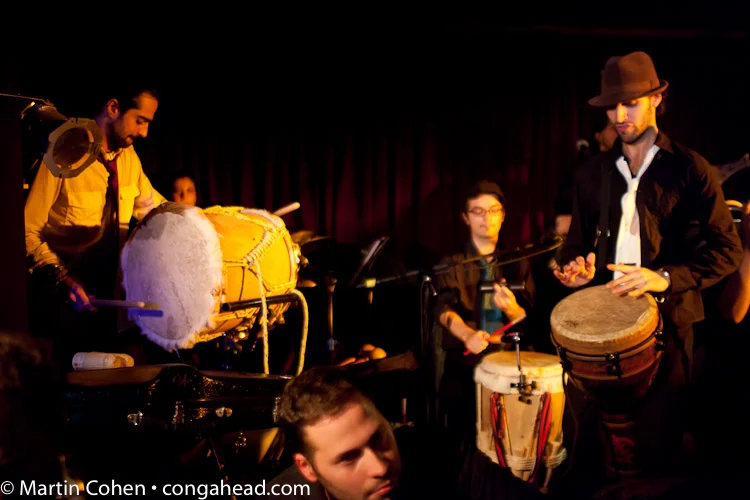
Chandé, porro, fandango, tambora, bullerengue, cumbia and vallenato are just some of the many rhythms/styles that come from the Caribbean Coast of Colombia. An interactive workshop where students will learn to perform the various percussion patterns involved while understanding the historical, geographical and social aspects that differentiate each style from the next. Each of these rhythms has at least three percussion instruments playing simultaneously and each student will get to play each of these, practicing to lock as part of a rhythms section while learning about new styles of music and their cultural context. This workshop can be geared towards advanced percussionists or toward other instrumentalists with no previous percussion training who want to expand their rhythmic and cultural knowledge. The following videos shows Gregorio leading a percussion rehearsal where all members of his big band learn to play the basic rhythmic patterns of the Colombian Coast. This workshop is the type of initiative that has made his 16-piece ensemble groove as one.
Colombian music overview: Diversity within a nation

Photo Credit: Mulato Films
Colombia is a tremendously diverse country both geographically and ethnically and that has been reflected in its music ever since it’s origins as a modern nation. The Native, African and European influences (and the combination of these) are present in the instruments, lyrics, rhythmic patterns, melodies and types of ensembles that make up Colombian music in it’s broadest sense. European waltz-like pasillos in the Andes mountains, African marimba de chonta in the pacific ocean, llanero (cowboy) improvisations stand-off played with harps in the oriental plains, German accordions with native guacharacas playing vallenato and brass bands playing fandangos in the Sinú valley. These are just a few in an extensive list. In an interactive workshop Gregorio will showcase one or two styles from the four main cultural regions of Colombia giving students and teachers a basic understanding of Colombian musical identity. This workshop can involve the students playing the styles on their own instruments and, in some cases, on the actual native instruments of Colombia.